

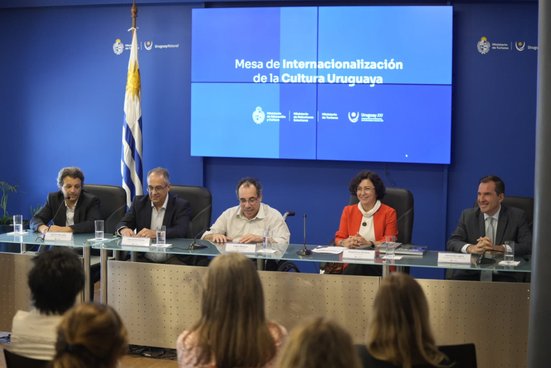
Image: (L-R) Mr Martín Mercado, Deputy Director of Uruguay XXI; H.E. José Carlos Mahía, Minister of Education and Culture; H.E. Pablo Menoni, Minister of Tourism; Ms Magdalena Moreno Mujica, Executive Director, IFACCA; and Ambassador Fernando Lugris, Director General for Cultural Affairs at the Ministry of Foreign Affairs. Credit: Ministry of Education and Culture, Uruguay.
With the presence of the Minister of Education and Culture, H.E. José Carlos Mahía; Minister of Tourism H.E. Pablo Menoni; Director General for Cultural Affairs at the Ministry of Foreign Affairs Ambassador Fernando Lugris; and Deputy Director of Uruguay XXI Mr Martín Mercado, a discussion was held on Tuesday, 10 February, in the conference room of the Ministry of Tourism with IFACCA’s Executive Director, Ms Magdalena Moreno Mujica.
The event was organised by the Internationalisation of Culture Committee, comprising the Ministry of Education and Culture, through the National Directorate of Culture; the Directorate-General for Cultural Affairs of the Ministry of Foreign Affairs; the Ministry of Tourism; and Uruguay XXI. It was attended by authorities and technical teams from various public institutions linked to the sector.
At the opening, the Minister of Education and Culture, H.E. José Carlos Mahía, stated that ‘the internationalisation of culture, when well organised, is a structural part of the design of our public policies on culture, tourism and development in general,’ and stressed that cultural and creative economies ‘generate employment, innovation and sustainable development, but also build the country's image.’
The Minister of Tourism, H.E. Pablo Menoni, pointed out that ‘transversality is combined with the synergy between the institutions that support this process’ and stressed that cultural tourism constitutes ‘a strategic segment and a showcase for promoting Uruguay abroad,’ reaffirming his ministry's support for this agenda.
For his part, Ambassador Fernando Lugris, Director General for Cultural Affairs at the Ministry of Foreign Affairs, stated that the event is taking place ‘at a particularly opportune moment, when the country is making strategic decisions about the international projection of its culture,’ He emphasised that the Foreign Ministry promotes internationalisation as a central public policy, convinced that ‘Uruguay is a country where soft power far exceeds hard power.’
The Deputy Director of Uruguay XXI, Mr Martín Mercado, raised the need to ‘deepen knowledge about the contribution of culture to the national economy’ and highlighted the importance of strengthening inter-institutional coordination to move towards a sustained country strategy.
The event was moderated by Ms Alicia Cano, Coordinator of International Relations and Cooperation at the National Directorate of Culture of the Ministry of Education and Culture (MEC).
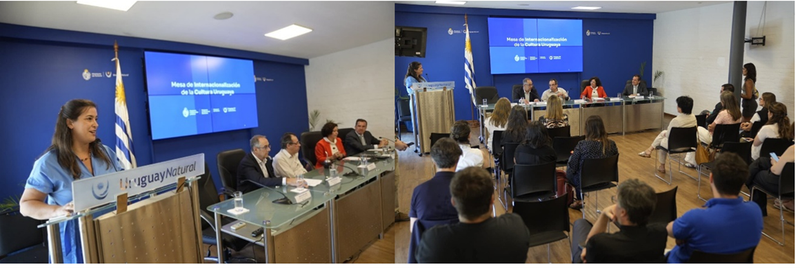
Image: Ms Alicia Cano, Coordinator of International Relations and Cooperation at the National Directorate of Culture of the Ministry of Education and Culture moderating the discussion. Credit: Ministry of Education and Culture, Uruguay.
During IFACCA’s presentation, Ms Magdalena Moreno Mujica stressed that internationalisation of culture cannot be limited to an exclusively economic logic, but must integrate cultural rights, identity diversity, artistic mobility, cultural diplomacy, digital platforms and public policy coordination.
Ms Moreno Mujica placed the debate in a global context marked by the climate crisis, the acceleration of digital processes and persistent inequalities, and warned of the risk of cultural homogenisation in international outreach processes. ‘Before projecting ourselves internationally, we must ask ourselves who we are and how we want to represent ourselves,’ she said, highlighting the importance of building a country narrative based on diversity and authenticity, with arts and culture at the heart.
The exchange allowed for the sharing of international lessons learned and reflection on the need to define a clear roadmap, with political support, inter-institutional coordination, and institutional continuity over time. Ms Moreno Mujica valued Uruguay's democratic strength and institutional stability as strategic assets for projecting its culture on the global stage, and highlighted that the country's size can favour agile coordination and decision-making processes.
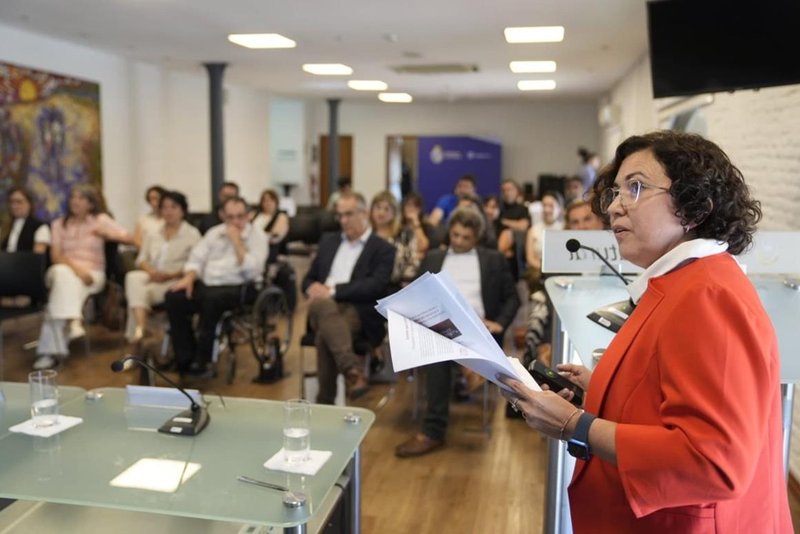
Image: Ms Magdalena Moreno Mujica during her presentation at the event. Credit: Ministry of Education and Culture, Uruguay.
The event was the first public working session of the Internationalisation of Culture Roundtable, consolidating a space for strategic dialogue aimed at strengthening the international projection of Uruguayan talent and integrating culture as a structural dimension of national development.
Also noteworthy was the participation of the National Director of Tourism, Mr Cristian Pos; the Director of International Cooperation and Projects at the MEC, Ms Andrea Vignolo; the Coordinator of the National Institute of Performing Arts, Mr Gustavo Zidane; the Coordinator of the National Institute of Visual Arts, Mr Martín Craciun; the Coordinator of the National Institute of Literature, Ms Valeria Tanco; the Coordinator of Creative Economy at the DNC, Ms Joanna Peluffo; the advisor on Cultural Affairs at the Ministry of Foreign Affairs, Ms Fabiana Goyeneche; the Director of ANDE, Ms Soledad Marazzano; the coordinator of the Sala Verdi, Mr Felipe Villarmarzo; and Mr Mathías Escotto Gadea, cultural representative of the Uruguayan Agency for International Cooperation (AUCI), among other authorities and representatives of the sector.